

Preparing a concise brief for b2b website redesign uk projects makes procurement smoother and helps marketing, partners and managing partners set measurable expectations. This guide explains what to include, the KPIs to track for professional services (for example accountants), how to prioritise content and which handover items to require from your agency.
Why a clear brief matters for a B2B website redesign
What a good brief delivers (alignment, scope, measurable outcomes)
A clear brief aligns stakeholders on objectives, scope and timescales. It reduces ambiguity in proposals, ensures agencies price comparable work and creates measurable outcomes you can report against. For B2B professional services this means defining the target sectors, typical buyer journeys and what counts as a qualified lead.
Common briefing mistakes that cause delays and extra cost
- Missing or vague objectives (“improve visibility”) instead of specific outcomes (“increase demo requests by X”).
- Undefined scope or page list, leading to scope creep.
- No content owner or migration plan—content work is often underestimated.
- No acceptance criteria or test plan, delaying sign-off and launch.
How detailed should your brief be?
Provide enough detail for apples-to-apples proposals: objectives, audience, mandatory features, a page priority list and preferred CMS or integrations. Leave room for agency recommendations on structure and creative, but be explicit about non-negotiables (security SLAs, accessibility level, integrations).
Define objectives, audience and KPIs
Primary objectives: lead generation, qualification, authority-building
For accountants and other UK professional services, common primary objectives are:
- Generate qualified leads (enquiries that meet size/sector thresholds).
- Improve lead quality via better qualification on site (forms, calculators, clear service pages).
- Build authority through sector pages, case studies and resources to support partner conversations.
Use this section of your brief to explain buyer profiles, typical deal size and any partner or referral processes the site must support. For an example of a B2B-focused approach, include a link to a specialist agency page such as B2B web design so suppliers understand your expectations.
Recommended KPIs and examples
- Traffic and channels: sessions from targeted sectors or referrals.
- Conversion metrics: form completions, demo requests, downloads (counted as MQLs when they meet criteria).
- Engagement: time on key pages (sector/service pages), resource downloads.
- Direct contact: phone calls and contact form conversion rates.
- SEO health: indexable pages, successful redirects and core organic keyword rankings (used for reporting, not promised outcomes).
Give examples in the brief: e.g. “Target: 25 qualified enquiries per month from mid-market manufacturing within 12 months.” Avoid promising results; use KPIs to guide measurement only.
How to align KPIs with sales/partners and reporting cadence
State who owns reporting (marketing, sales or operations), frequency (weekly/ monthly/quarterly) and what a qualified lead looks like. Include integration requirements so CRM-based KPIs are tracked correctly.
Scope, pages and technical requirements
Page list and priority
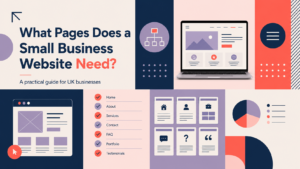
Provide a proposed page list and flag priorities to keep quotes comparable. Typical B2B site sections:
- Homepage
- Services (main pages + detailed subpages)
- Sector pages (targeted content for key industries)
- Resources: articles, guides, case studies, calculators
- About, team, contact and legal pages
Mark pages as Must-have, Nice-to-have and Future-phase to help agencies scope phases.
Feature list
List required features and integrations: CMS choice, contact and qualification forms, CRM integration, event tracking, calculators or quote builders, client portals and payment or subscription systems where relevant.
Non-functional requirements
- Performance targets (page load timings and Core Web Vitals expectations).
- Availability, backups and recovery point objectives.
- Security expectations: SSL, malware scanning and patching policy.
Content priorities: audit, gaps and migration
Run a content inventory and simple content scoring
Start with an inventory: URL, title, last updated, traffic and conversion stats. Score pages as Keep, Update or Retire based on relevance and performance. Include a spreadsheet sample or ask the agency to provide one as part of discovery.
SEO brief essentials
Ask for a migration plan that covers target keywords, meta titles and descriptions, a canonical strategy and a full redirect map for any URL changes. Make clear who is responsible for implementing redirects and monitoring post-launch search performance.
Who supplies content and timetable for migrations
Identify content owners and realistic deadlines. Typical models: client supplies drafts and approvals; agency provides copywriting; or a hybrid. State delivery windows for each page or phase to prevent delays.
Design, UX and accessibility expectations
Brand and visual guidelines to include in the brief
Attach logos, colour palettes, typefaces and tone-of-voice notes. If you require a refreshed identity or logo, request branding support and link to services such as Custom logo design.
Wireframes, templates and responsive behaviour to request
Ask for desktop and mobile wireframes for key templates (homepage, service page, resource/article). Specify responsive behaviour and breakpoints and include a link explaining responsive expectations, for example Responsive web design.
Accessibility and usability: what to require in the brief
State the required accessibility standard (for example WCAG 2.1 AA) and require keyboard navigation, clear headings, alt text for images and colour-contrast checks. For small-business guidance on responsive and usable design, see Why responsive web design for small business matters.
Integrations, third-party systems and hosting
Common integrations for accountants
List typical systems: CRM (for leads), practice management systems, payment portals and client portals. Specify whether real-time data exchange is required and what data fields must sync.
CMS choices and migration notes
State your preferred CMS or ask agencies to recommend one with pros and cons. If WordPress is under consideration, ask how the agency will handle plugins, backups and security; for WordPress-specific guidance include a reference to WordPress web design. If ecommerce or transactions are required, agencies should explain options such as using an ecommerce plugin or alternative platforms; offer readers further guidance with links to E-commerce store design, Shopify web design and the migration checklist How to brief an agency for a WordPress to Shopify migration.
Hosting, SSL, backups, security scans and performance SLAs
Ask for recommended hosting tiers, backup frequency, patching windows and an SLA for uptime and incident response.
Project plan: milestones, acceptance criteria and change control
Suggested milestones
- Discovery and content audit
- Design (wireframes, visual design, client sign-off)
- Development (build and integrations)
- UAT and accessibility testing
- Launch and post-launch support
Define acceptance criteria and testing responsibilities
For each milestone state deliverables and acceptance checks. Include who performs testing (agency, client or third party) and what passing looks like for accessibility, performance and functional tests.
Change requests and scope management
Require a written change-control process: how to request changes, turnaround for estimates, and how additional costs will be authorised.
Handover checklist and deliverables to request from the agency
Design and brand assets (source files, fonts, style guide)
Require final assets and source files (SVGs or vector logos, font licenses, style guide). For a more detailed asset list see the agency handover guide Website redesign asset checklist UK: agency handover guide for UK businesses.
Technical handover
- Credentials for hosting, CMS admin, analytics and integrations.
- Documentation for deployment, backups and any custom code.
- Full backup and a tested rollback process.
Training, support period and post-launch optimisation tasks
Agree a handover period with training sessions for content editors and a defined support window for bug fixes and small changes after launch. Include a simple optimisation plan for the first 90 days.
KPIs, measurement and post-launch optimisation
Analytics baseline and tracking plan
Record current analytics baselines and request an implementation plan for goals, events and funnels. Include conversion tracking for forms, downloads and phone calls.
Reporting frequency and dashboards
Specify reporting frequency and preferred dashboards (Google Analytics, Data Studio or similar). State which KPIs each stakeholder expects to see.
Plan for continuous improvements and A/B testing
Include a schedule for review cycles and a small monthly optimisation budget to run A/B tests on headlines, CTAs and key pages.
Practical brief template and checklist (copy for procurement)
Template sections to include
- Project summary and objectives
- Audience and buyer personas
- Scope and page priority
- Required integrations and technical notes
- KPIs and reporting expectations
- Timeline, budget and contacts
One-page checklist to attach to procurement documents
Provide a concise checklist of Must-have items (accessibility, backups, acceptances) and responsibilities (who supplies content, who owns redirects).
How to score agency proposals quickly and fairly
Score proposals against criteria: understanding of objectives, technical approach, content and SEO plan, accessibility and proposed milestones. Ask for two reference projects and a clear breakdown of costs by phase.
FAQ
How detailed should our brief be for a B2B website redesign?
Detailed enough to compare proposals on the same basis: objectives, must-have features, page priorities and required integrations. Leave creative solutions to the agencies.
Which KPIs are most important for professional services websites (accountants)?
Focus on qualified enquiries (MQLs), form completions, demo or consultation requests, and engagement on sector/service pages. Track phone calls and CRM conversions where possible.
Who should own content creation and migration during a redesign?
Decide up front. Many clients supply subject-matter content while agencies handle structure, technical migration, SEO briefs and final copy editing. Clearly assign responsibilities in the brief.
What must we request in the agency handover to retain control of the site?
Request credentials for hosting and CMS, source design files, a redirect map, backup copies and deployment notes. Require training for site administrators.
How long does a typical B2B website redesign take in the UK?
Timelines vary by scope. A focused redesign might take 10–14 weeks; a larger project with complex integrations and content migration can take several months. Include milestone dates in the brief to set expectations.
Next steps: use the brief template above in procurement meetings, score proposals against the same criteria and ask agencies for a phased plan and clear acceptance criteria. When you are ready, Request a free consultation with Logo Metic to discuss your brief and project requirements.