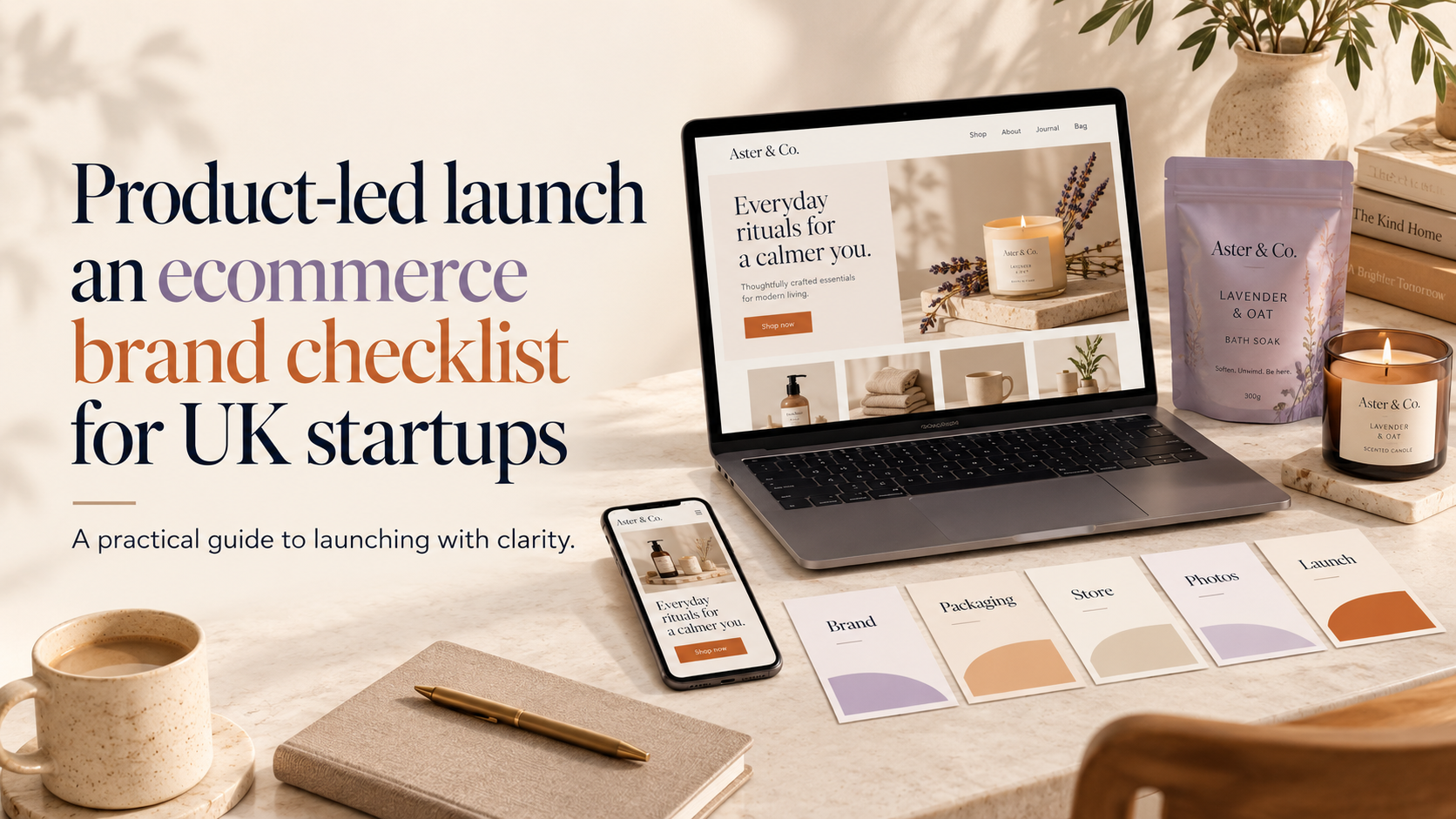
Launching a product brand is more than a good label and a website. A phased, product-led ecommerce brand checklist uk keeps naming, legal checks, pack-ready artwork and marketplace rules in the right order so you avoid reprints, listing rejections and fulfilment surprises.
Why a product-led brand checklist matters
Common launch delays for product brands
Startups commonly hit delays from naming conflicts, late artwork, incorrect pack sizes and missing compliance information. These can derail print runs, marketplace listings and shipping preparations.
How following an ordered checklist saves time and cost
By deciding the name, trademark position, artwork and packaging dimensions early, you reduce the risk of rework. That saves both lead time and the expense of reprinting boxes or relisting products on marketplaces.
Who should use this checklist
This guide is designed for product-led startups, indie brands and D2C founders launching in the UK who need a clear sequence of tasks from name selection to launch day QA.
Phase 1 — naming, legal checks and positioning
Step 1: define product positioning and naming brief
Start with a short brief: product category, target customer, tone, keywords you want in the name and any domain goals. Note whether you prefer descriptive names (helps search) or coined names (easier to trademark).
Step 2: quick online checks
- Check domain availability for primary and defensive domains.
- Search marketplace handle availability (Amazon seller name, Etsy shop, Instagram, TikTok).
- Do simple Google and social searches to spot obvious conflicts.
Step 3: UK trademark and company name checks
Search the UK Intellectual Property Office (UKIPO) register for similar marks and check Companies House for existing trading names. For anything important, consult a solicitor or trademark attorney to assess freedom-to-operate and class coverage.
Step 4: labelling and claims you can legally make in the UK
Be cautious with health, safety or performance claims. For food, cosmetics or medical products, follow sector rules (for example, Food Standards Agency or MHRA guidance). Avoid unverified claims that could be considered misleading — seek legal or regulatory advice where necessary.
Phase 2 — visual identity and pack-ready artwork
Logo and core identity elements
Prepare logo variations for pack use: full logo, simplified mark, monochrome and reversed versions. Specify clearspace, minimum sizes and colour values (hex for digital, Pantone for spot inks where used).
If you need help building the system behind the logo, our brand identity services can convert your naming brief into a usable visual system.
Packaging artwork basics
- Work in the correct colour mode: printers typically expect CMYK; spot inks must be specified as Pantone.
- Include dielines and a clear bleed area (typically 3–5mm depending on the printer).
- Supply high-resolution, print-ready files: PDF/X-1a or print-ready PDFs with fonts embedded; supply layered source files where required.
Discuss file formats and colour expectations with your printer before finalising artwork.
Designing for postage and courier constraints — practical checklist
- Confirm finished pack dimensions and weight before ordering stock.
- Check orientation and labelling space for courier labels and returns stickers.
- Avoid fragile protrusions or loose packaging that increase accepted courier charges.
Our article on packaging design that meets UK postage and courier constraints explains common sizing and structural considerations.
Examples: briefing a designer or agency for product pack artwork
Your brief should include: product dimensions, dielines, legal text, barcode location, colour references, target print process, and delivery deadlines. If you need a new logo or variations for packaging, consider a custom logo design consultation.
Phase 3 — packaging, labelling and compliance before production
Material and structural choices
Select materials and request physical samples before committing to a print run. Check durability, finish (matte/gloss), and whether your chosen structure protects the product during transit.
Barcodes and GTINs
Buy or assign GTINs/Barcodes and plan their placement on the pack for easy scanning. Ensure the barcode size meets scanner tolerance and leave adequate white space.
Sustainability and marketing claims
If you make environmental claims, keep evidence and be specific to avoid greenwashing. See our guidance on sustainable packaging design options for UK startups for cost-effective choices and compliant copy.
Printer and supplier checklist
- Order physical proofs and colour-matched swatches.
- Confirm lead times, minimum runs and reprint turnarounds.
- Get a written approval process for proofs and sign-off responsibilities.
Phase 4 — ecommerce listings, marketplace rules and website launch
Product photography and hero images
Plan product shots to match packaging and brand tone: pack-on-white, pack-in-context and lifestyle images. Use consistent lighting and aspect ratios for marketplace compliance and website templates.
Marketplace-specific rules
Each platform has rules on imagery, permitted claims and listing copy. For example, Amazon and Etsy have image size and content rules that affect how your packaging appears in search results; review their seller policies early to avoid listing rejections.
If you are moving from a marketplace model to your own store, our migrating from Etsy to Shopify checklist explains how to keep listing copy and pack imagery consistent during migration.
Website readiness: pack shots, SKU data and mobile-first pages
Ensure product pages show high-quality pack shots and include SKU, weight, dimensions and any regulatory text. If you need a D2C site or landing pages that present product and packaging clearly, discuss your project with our e-commerce store design services for retailers or book a WordPress web design consultation.
Order of tasks to avoid rework
- Confirm name and legal checks.
- Finalise pack artwork and proofs.
- Produce product photography from approved packs.
- Publish listings with matching imagery and copy.
Phase 5 — pre-launch QA checklist and launch day plan
Final QA checklist
- Artwork approvals signed and PDF proofs archived.
- Barcode scan test and SKU verification.
- Proof-of-shipment dimensions and sample parcels checked against courier limits.
- Listing review for each marketplace: images, titles, categories and claims.
Soft launch and pilot orders
Run a small pilot to test fulfilment, packaging robustness and customer feedback. This will uncover problems before a full launch.
Launch day checklist
- Confirm inventory and fulfilment partner readiness.
- Publish listings and verify they are live on each marketplace and your site.
- Check checkout flows, promotional codes and mobile purchase experience.
- Prepare customer service messaging and returns process.
If you want support optimising product pages and checkout flows as part of final QA, our e-commerce store design services for retailers can help.
Appendix: practical templates and short checklists
One-page naming checklist
- Does the name reflect positioning and tone?
- Is the .co.uk/.uk domain available?
- Are social handles free on key platforms?
- Any identical or similar UK trade marks?
- Company name check at Companies House?
Packaging artwork brief template
- Product dimensions and dieline file
- Legal and regulatory text to include
- Barcode and GTIN location
- Colour references (Pantone/CYMK) and finish
- Delivery deadline and proof approval workflow
7-step launch sequencing table (recommended order)
- Name approved — Legal checks cleared (Owner: Founder)
- Brand identity and logo variations finalised (Owner: Designer/Agency)
- Pack artwork finalised and printer proofed (Owner: Production)
- Physical samples and photoshoot (Owner: Marketing)
- Listings written and QA’d for marketplaces (Owner: Ecommerce)
- Pilot orders and fulfilment test (Owner: Operations)
- Full launch and customer support live (Owner: All)
For help turning this into a full rollout, our brand identity services (planning & rollout) can convert checklist items into a cohesive brand pack.
FAQ
What are the first three brand tasks every product-led ecommerce startup in the UK should do?
1) Define product positioning and naming brief. 2) Run quick domain, social and basic UKIPO/Companies House checks. 3) Begin basic pack artwork direction so packaging dimensions and label text are known early.
How do I check if my product name is available in the UK?
Search the UKIPO trade mark register and Companies House for similar names. Also check domain registrars and marketplace handles. For formal clearance, consult a trademark attorney.
What file formats and colour modes do printers and couriers expect for pack artwork?
Printers usually ask for print-ready PDFs (PDF/X), CMYK colour mode or specified Pantone spot inks. Include dielines and bleed. Confirm exact requirements with your chosen printer before finalising files.
Which marketplace rules commonly affect packaging and imagery in the UK?
Marketplaces set rules on image dimensions, prohibited content and claim types. Amazon and Etsy require clear product images and accurate titles; some platforms restrict promotional overlays on primary images. Review seller policy pages for each marketplace you plan to use.
When should I hire a designer or agency for packaging and website work?
Hire a designer once the name and legal checks are sufficiently clear to avoid rework. If you need coordinated packaging, photography and a sales-ready site, engage an agency early so visual identity, pack artwork and product pages are aligned.
Request a free consultation with Logo Metic — if you want practical brand and pack-ready artwork support for a product-led launch, discuss your project with our team at https://logometic.co.uk/brand-identity/ or email support@logometic.co.uk.