
Brand identity design Leeds is about more than a logo: it’s the visual and verbal system that helps a small business in Leeds be recognised, trusted and chosen by local customers. This guide explains what a practical brand identity project looks like, how to plan it, what to expect in deliverables and costs, how to choose between freelancers and agencies, and the local steps Leeds businesses should take next.
Why brand identity matters for small businesses in Leeds
Good brand identity builds trust, helps you stand out on busy streets like Briggate or in crowded online searches, and gives customers a consistent experience wherever they meet your business. For small businesses, clear identity can turn casual visitors into repeat customers and make marketing more efficient.
How brand identity differs from a logo
A logo is a single mark or wordmark. Brand identity is the system around that logo: colour palette, typefaces, imagery, tone of voice and application rules. You can think of the logo as a headline and the identity as the full set of rules that make every touchpoint feel like the same business.
Local market examples: standing out on Briggate, Leeds markets and online
In Leeds you compete both in person and online. A café on Kirkgate Market needs signage that reads well from the market aisle and imagery that looks good on Instagram. A professional service on Park Row may rely on a confident typographic identity across its website and LinkedIn. Tailoring brand use to where customers discover you locally makes the identity more effective.
When a brand identity will have the biggest business impact
- Launching a new business or range of services in Leeds.
- Opening a physical shopfront, market stall or pop-up.
- Scaling marketing across digital channels and local advertising.
- When customers are confused about what you offer or how you differ from competitors.
What a practical brand identity project includes
Knowing the usual components helps you compare proposals and avoid scope creep. A small business project focuses on the essentials you’ll use day-to-day.
Core components: logo, colour palette, typography, imagery and tone of voice
- Logo — primary and simplified versions (for social avatars and signage).
- Colour palette — primary and secondary colours and guidance on contrast.
- Typography — suggested fonts for headings, body text and web use.
- Imagery — photography or illustration style and example compositions.
- Tone of voice — short guidance on language, formality and key messages.
When you need a professionally designed logo, consider a trusted provider. Logo Metic offers Custom logo design services for startups and small businesses that fit into a wider identity package.
Deliverables checklist for small businesses (file types, usage rules, basic brand guide)
- Logo files: vector (SVG or EPS) and high-resolution PNG/JPG versions.
- Colour values: HEX, RGB and CMYK for print and web consistency.
- Typography notes: font names and fallbacks for web use.
- Basic brand guide (1–4 pages): logo use, clear space, incorrect uses and sample applications.
- Optional: social avatars, email signature, and simple stationery templates.
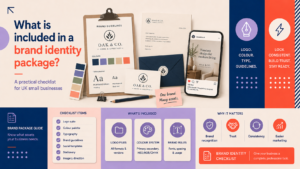
For a fuller package, see Logo Metic’s Brand identity design (complete brand identity) and the article that lists standard inclusions, What is included in a brand identity package? A practical checklist.
How this differs from a full rebrand
A rebrand often includes research, positioning, new company name or structural changes and a larger rollout plan. A brand identity project for a small business typically focuses on the visual and verbal system rather than organisational change.
How to plan your brand identity project (step-by-step)
Preparation saves time and keeps costs predictable. Use this checklist before you contact designers.
- Define goals — Who are your customers in Leeds? Which channels (shopfront, website, social, market stalls) matter most? What will success look like in six months?
- Gather inspiration and run a competitor audit — Collect examples you like and check how local competitors present themselves. Note colour trends and common phrases to avoid blending in. Focus on businesses selling to similar customers on Briggate, at the Victoria Quarter or the university areas.
- Create a creative brief — At minimum include business overview, target customers, primary channels, three visual references, required deliverables and proposed timeline. A simple template checklist helps designers give accurate quotes.
- Set a timeline and milestones — Typical small projects: discovery and brief (1–2 weeks), concepts (2–3 weeks), revisions (1–2 weeks), final deliverables (1 week). Allow more time if you need stakeholder approvals or signage production.
If you want agency support for a full identity project, consider discussing your brief with Logo Metic’s Brand identity design (discuss a complete brand identity).
Comparing options: freelance designers, design agencies and templates
Freelancer vs agency: what each offers small businesses
- Freelancers — often lower cost, direct contact with the designer, flexible for small scope work. Best for straightforward projects with limited deliverables.
- Agencies — broader team, strategic capability, and reliable production of all assets (web, print, signage). Better for growing businesses or when you need consistent multi-channel rollout.
When to use a custom logo service vs templated solutions
Templates and automated logo tools are fast and cheap but can limit uniqueness and future flexibility. A custom logo is preferable if you need a distinctive identity that will be used across physical signage, packaging and a website.
For bespoke options, see Custom logo design services (for choosing the right creative approach).
Questions to ask prospective designers or agencies
- Can you show examples of small business work and explain the process?
- What deliverables are included and what will be extra?
- How many concepts and revision rounds are included?
- Will you provide vector files and a basic brand guide?
- Do you handle production for signage or web implementation, or recommend partners?
Costs and scope: what to expect (practical guidance, not prices)
Factors that change project scope and cost
- Number of logo concepts and revision rounds.
- Depth of strategy or research required.
- Quantity and type of deliverables (packaging templates, signage artwork, social templates).
- Project timeline and whether rush work is needed.
How to compare quotes fairly
- Compare scope, not just price. Ensure quotes list the same deliverables and file types.
- Ask for a clear revision policy and turn-around times.
- Check whether production-ready files for printers or signmakers are included or charged separately.
For more on logo pricing considerations, see Professional logo design cost UK: a practical cost guide for small businesses.
Applying your brand across digital and physical touchpoints
Website and e-commerce — preparing assets for WordPress or online stores
Provide your website designer with vector logos, HEX colour values, font files or web font names and sample imagery. If you’re building or updating a WordPress site, book a developer who understands how to implement the brand. Logo Metic can help with a tailored site: Request a WordPress website consultation (prepare assets for your site).
Retailers preparing online stores should also plan product imagery, packaging templates and consistent listing descriptions; Logo Metic’s E-commerce store design for retailers and online businesses can assist with storefront branding.
Social media and local directory listings
- Keep profile avatars consistent and sized correctly for each platform.
- Use the same descriptive copy and category terms across directories such as Google Business Profile to avoid confusion.
- Prepare a short brand bio for listings and a set of useful hashtags or keywords for local discovery.
Signage, stationery and local marketing for Leeds high streets
Consult your local signmaker or printer early to confirm file formats and any local planning constraints. If you need help preparing artwork for signage or print, include production as part of your project brief.
Rebranding without disrupting customers
Signs you need a rebrand
- Customers don’t understand what you offer.
- Your visual identity looks dated compared with competitors.
- Your business has changed services, target customers or structure.
Stepwise roll-out and communication checklist
- Decide which assets change first (website, social, signage).
- Keep old and new identity assets side-by-side during a transition period when possible.
- Communicate the change to customers with a short explanation and reasoning on your website and social channels.
How to keep SEO and customer trust during a rebrand
Keep URLs stable where possible, set up redirects for any changed pages and update directory listings. If you need detailed steps, see Logo Metic’s guide How to rebrand a small business without confusing customers — a practical UK guide.
Local resources and next steps for Leeds small businesses
Where to find local design meetups, business support and networks in Leeds
Look for Leeds business networks, university enterprise centres and local meetups that offer peer feedback and occasional pitch sessions. These groups are useful for testing identity ideas before committing to production.
How to brief a Leeds-based designer versus a remote agency
Local designers may offer face-to-face meetings and easier site visits for signage. Remote agencies can be equally effective but set expectations for virtual review rounds and file delivery. The brief content is the same; logistics and communication preferences differ.
Ready-to-use checklist: prepare for a free consultation
- Clear business summary and target customers.
- Three visual examples you like and three you dislike.
- Primary channels (shopfront, market, website, social).
- List of required deliverables and any hard deadlines.
FAQ
How much does brand identity design in Leeds usually cost for a small business?
Costs vary with scope and deliverables. Rather than fixed figures here, review proposals by comparing included files, revision rounds and strategy work. For more detail on logo costs, see our practical guide on Professional logo design cost UK.
What should I include in a creative brief for a Leeds-based design agency?
Include a business overview, target customers, key channels, examples of styles you like, required deliverables, deadlines and your budget range. The clearer the brief, the more accurate the quotes you receive.
Can I update my logo without rebranding completely?
Yes. Many small businesses refresh their logo and keep existing brand elements. A light update can modernise your look while keeping customer recognition intact.
How long does a typical small business brand identity project take?
Small projects commonly take 4–8 weeks from brief to final assets, depending on feedback cycles and deliverables. Allow extra time for signage production or coordinated rollouts.
What assets do I need to prepare for a website designer after finishing my brand identity?
Provide vector logos, HEX/RGB colour values, font names or web font links, sample imagery and a basic brand guide. If you plan a WordPress site, consider booking a developer early; see Request a WordPress website consultation (prepare assets for your website).
Conclusion and how Logo Metic can help
Prioritise clarity: define who your customers are, decide the channels that matter most in Leeds, and prepare a concise brief. If you want professional support for a complete identity, Logo Metic offers full Brand identity design (discuss a complete brand identity) and bespoke logo work via Custom logo design services for startups and small businesses.
Request a free consultation with Logo Metic to discuss a practical brand identity plan for your Leeds business. Email support@logometic.co.uk or call +44 7883 180004 to arrange a no-obligation chat.