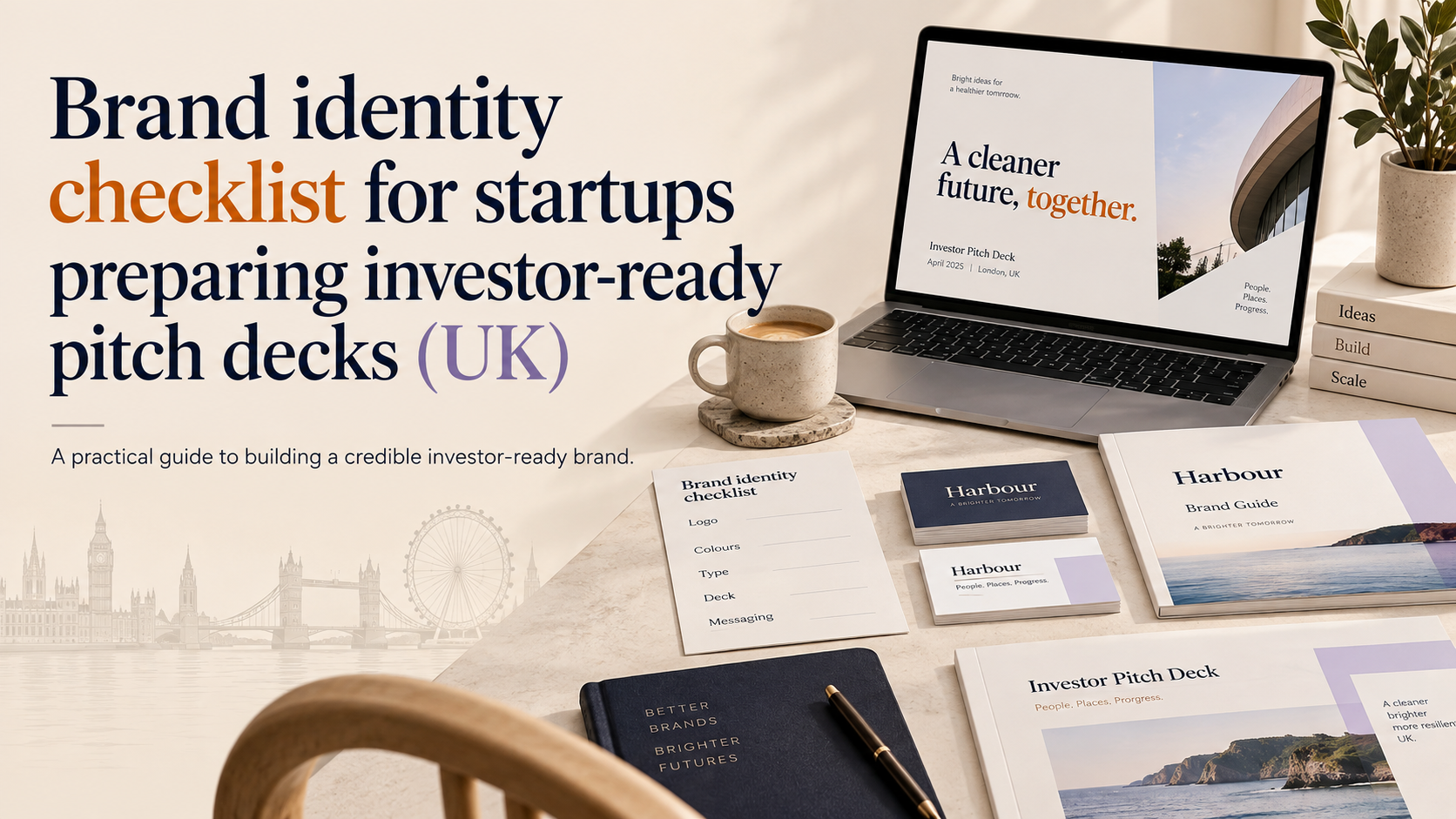
A clear brand helps investors assess your business faster and more confidently. This brand identity checklist startups uk guide lays out the visual and technical assets investors expect, plus practical presentation tips so your pitch deck looks polished and is easy to review.
Why your brand identity matters to investors
What investors look for in visuals and brand signals
Investors form quick impressions from the first few slides. Clean, consistent visuals communicate professionalism, product-market fit and attention to detail. They look for a recognisable logo, consistent colour palette, readable typefaces and product imagery that matches your proposition.
How good brand assets speed up due diligence and meetings
Well-organised assets reduce follow-up requests. If you supply vector logos, clear screenshots and a concise brand story, investors can share materials with colleagues and advisers without extra work. That saves time and makes your team appear prepared.
Common investor misconceptions about branding (and how to avoid them)
Some founders think branding is cosmetic. In reality, consistent branding helps explain positioning and reduces ambiguity in materials. Avoid over-designing slides; prioritise clarity and consistency instead.
Investor-ready brand identity checklist (core assets)
Below are core items every startup should prepare before investor meetings. Include the items in both your pitch deck and a separate follow-up visual pack.
Primary logo and acceptable variations
- Primary logo (full lockup) — for title slides and cover pages.
- Secondary variations — stacked, mark-only (icon), horizontal.
- Monochrome and reversed versions — for dark and light backgrounds.
If you need a professional logo or additional variations, consider a custom logo design service to produce print-ready and web-ready files.
Logo file formats and size guidance
- Vector: SVG and EPS — use for scalable displays and print; ideal for designers and press.
- High-quality PNG: 72dpi for slides, 300dpi for print exports; provide transparent and solid-background versions.
- PDF: single-page exports for sharing with non-designers.
Supply multiple sizes and a simple naming convention (eg: logo_primary_colour.svg, logo_mark_white.png).
Colour palette
- Primary palette: include HEX, RGB and CMYK values for each colour.
- Secondary palette: supporting colours for charts and accents.
- Contrast notes: indicate which colour combos are for text vs backgrounds.
Typography
- Primary typeface (used for headings).
- Secondary typeface (used for body text).
- Web-safe fallbacks: list alternatives for PowerPoint, Google Slides and HTML.
Imagery and photography style guide
- Examples of approved images: product-in-use, team, office, customers.
- Dos and don’ts: avoid unclear screenshots, over-staged stock photos or inconsistent colour grading.
- Provide aspect-ratio guidance (16:9 for slides, 1:1 for logos or avatars).
Iconography and UI element samples
Include a small set of app icons, button styles and input fields to show product consistency. For SaaS, provide UI screenshots annotated with callouts rather than full, cluttered pages.
Brand voice summary and one-line positioning
Provide a one-line positioning statement (what you do and who you serve) and a three-bullet tone guide (eg: confident, practical, human). This helps investors interpret customer-facing copy and slide captions.
Brand story & elevator pitch
- 30-second version: one crisp sentence for opening remarks.
- 2-minute version: brief problem, solution, traction and target market.
Presentation-ready assets to include in your pitch deck
Slide templates
Create and attach slide templates that match your visual system. At minimum include: title, problem/solution, market, product, traction, team and financials. Keep layout consistent across slides to reduce cognitive load.
Product screenshots and feature highlights
Provide uncluttered screenshots cropped to relevant areas and annotated with short captions. For web demos, include a link or a local static demo that uses the same branding as your slides.
If you need an investor-facing landing page or demo site, our WordPress web design service can help produce a polished experience for meetings.
Customer logos, testimonials and case studies
- Only use logos and quotes with written permission — keep a permissions checklist.
- Include one-page mini case studies with metrics, visuals and a short quote where possible.
Before/after or product-in-context visuals for SaaS demos
Show measurable outcomes visually where possible: simple charts, annotated screenshots and short captions explaining the business impact.
Data visualisation style guide
- Standardise chart colours to your palette and limit to two typefaces in charts.
- Label axes clearly and include short annotations or callouts for key numbers.
For startups selling online, ensure product screenshots and store flows reflect your live experience; consider using our e-commerce web design service for polished shop visuals.
Technical & legal checks before meetings
File naming, organisation and a single shareable folder
Provide a single folder (eg: Dropbox, Google Drive) with a clear structure: Logos, Fonts, Colour Guide, Slides, Screenshots, Case Studies. Name files consistently and include a short README with contact details.
Accessibility and cross-platform display
Test slides on both macOS and Windows, in PowerPoint and Google Slides. Use minimum font sizes (eg: 18–24pt for body on slides) and check colour contrast for readability.
Image rights, permission and trademark clearance
Confirm you have the right to use customer logos and photos. For basic trademark questions in the UK consult guidance from the UK Intellectual Property Office; consider formal clearance before broad public use if you have concerns.
High-resolution exports for PDFs and printouts
Export a print-ready PDF at 300dpi for any handouts and a screen-optimised PDF for emailing. Include native slide files for investors who request them.
How to present brand assets to investors (practical tips)
When to show the brand story vs product demo
Open with the one-line positioning and problem statement. Present the product demo after you’ve established the problem and market. Use the brand story to link team credibility and go-to-market strategy.
Using visual anchors
Keep a small, consistent header or footer with your logo and slide number. Place logo lockups consistently (top-left or bottom-right) so viewers don’t get distracted by changing layouts.
Keeping slides scannable
One idea per slide. Use short headlines, minimal bullets and a clear visual hierarchy. Avoid multiple typefaces and stick to your brand typography rules.
Follow-up visual pack for interested investors
Prepare a follow-up folder with high-res logos, a brand one-pager, full case studies and native slide files. For guidance on assembling a broader visual pack for fundraising, see our article on brand identity for startups fundraising UK: what to include in your visual pack before investor meetings.
Common mistakes startups make (and quick fixes)
- Low-resolution logos or inconsistent lockups — provide vector files and a simple logo usage guide.
- Overloaded slides — reduce to one message per slide and limit colours.
- Incomplete product screenshots — crop to relevant features and annotate.
- Not documenting brand decisions — include a short style README for any handover.
For slide layout and sequencing tips that complement this checklist, our guide on designing pitch decks that win meetings: visual and structural tips for UK startups is a helpful companion.
Final checklist and next steps
One-page final checklist
- Primary logo + variations (SVG, PNG, EPS) in a named folder.
- Colour palette with HEX, RGB and CMYK values.
- Typography list with web-safe fallbacks.
- Slide templates for core sections.
- Annotated product screenshots and case studies with permissions.
- Exported PDFs: screen and print-ready.
- Single shareable folder and README.
When to ask a designer
Consider professional help if you lack vector logos, consistent typography, or need a complete brand identity package. A designer speeds up quality assurance and produces reusable assets. Learn what’s typically included in a full brand identity package.
Using this checklist across investor types
Angels: prioritise a concise visual pack and demo links. VCs: include more data visualisations and case studies. Accelerators: focus on clear positioning and a strong MVP presentation.
FAQ
What are the absolute must-have brand files to bring to an investor meeting?
At minimum: primary logo (SVG), PNG versions (transparent), slide-ready PDF, one-line positioning, and a short 30s brand statement.
Which logo formats should I include so investors and partners can reuse them?
Include SVG and EPS for scalable use, and PNG (transparent) at a few sizes for quick placement. Provide a PDF export for non-design users.
How much brand detail should go into the pitch deck versus a follow-up pack?
The deck should show the essentials: logo, palette, one-line positioning, product screenshots and key visuals. Save full guidelines, fonts and raw files for the follow-up pack.
Do I need to trademark my logo before showing it to investors in the UK?
You do not usually need a registered trademark before showing investors, but if you have concerns speak with a suitable legal adviser. For basic steps, consult the UK Intellectual Property Office guidance.
When is it worth hiring a designer to prepare investor-facing visuals?
Hire a designer when you need vector logos, consistent typography, slide templates or a complete brand pack. Professional design reduces follow-up work and improves first impressions.
Request a free consultation with Logo Metic to review your investor-ready visual pack and brand assets. Discuss your project and next steps on our brand identity or logo services: brand identity design.