This guide explains how to think about small business rebrand cost uk in a practical, phased way. If you are a founder, managing director or marketing lead at a small UK business or startup, this article will define what we mean by a rebrand versus a refresh, list common deliverables, and show how to budget work in sensible phases so you can prepare an accurate brief and compare quotes.
Who this guide is for and how to use it
This is written for small businesses, startups and growing UK companies planning to change their brand identity, update a website or refresh customer touchpoints. Use the phased breakdown below to map your needs, decide which phases to fund first and prepare a brief that suppliers can price reliably.
Rebrand versus brand refresh
A brand refresh usually keeps core positioning and most assets but modernises the logo, colours or tone of voice. A full rebrand revisits strategy and positioning, creates a new visual identity and commonly involves a website rebuild and extensive rollout. Costs and timelines differ significantly between the two, so be clear which you need before you request quotes.
How to use this phased cost breakdown
Work through the phases, mark must-haves versus nice-to-haves and prepare an asset inventory (existing logos, fonts, website access, supplier contacts). Share that list with suppliers so proposals are comparable.
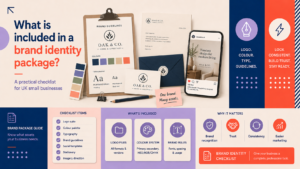
What a small business rebrand typically includes
Discovery & brand strategy
Discovery establishes who you serve, what differentiates you and which markets you should target. Typical deliverables are stakeholder interviews, competitor analysis, customer profiling and a simple brand positioning and messaging framework.
Visual identity
Visual identity covers logo design, colour palette, typography, imagery style and iconography. Deliverables commonly include logo files and usage notes, colour and type specifications and master artwork for digital and print.
Brand assets
These include stationery (business cards, letterheads), templates (PowerPoint, proposals), packaging or labels and any physical collateral. Production-ready files and dielines are important when budgeting print or packaging costs.
Digital assets
Digital work can be a website refresh or full rebuild, email templates, social profile banners and marketing templates. Website scope strongly affects cost — a content refresh is very different to a bespoke WordPress rebuild or ecommerce migration.
Guidelines, training and rollout support
Brand guidelines (simple or comprehensive), staff training sessions and rollout planning help keep the rebrand consistent. Many suppliers offer phased rollout support to reduce disruption.
Phased rebrand approach: why budgeting by phase matters
Phase vs one-off project: pros and cons
- Phased approach reduces immediate cost, allows testing with customers and lowers risk if strategy changes.
- One-off project can be faster and ensures consistency across all assets at once, but requires a larger upfront budget.
How scope changes affect cost
Common scope creep includes adding more logo variations, extra website functionality, unplanned packaging SKUs or additional stakeholder workshops. Agreeing a clear brief and change-control process helps keep quotes stable.
Recommended minimum outputs for each phase
- Discovery: concise strategy brief and core messaging.
- Identity: primary logo and usage files, colour palette and type stack.
- Digital: homepage design and template system, plus CMS handover for small sites.
- Rollout: simple guidelines and a prioritized rollout checklist.
Typical phased cost breakdown (how to budget a rebrand)
Below we describe the phases, deliverables and the main factors that influence cost. Precise market ranges will vary by supplier and will be added once you collect quotes.
Phase 1 — Discovery & strategy: deliverables, time and why it matters
Discovery reduces wasted design work. Deliverables usually include a project brief, market and competitor review, audience profiles and a positioning statement. Costs depend on the depth of research required and whether you need customer interviews or usability testing.
Phase 2 — Visual identity: logo options, asset packages and file handover
This phase covers concept development, refining selected directions and producing final files. When obtaining quotes, clarify:
- How many initial concepts and revisions are included.
- Which file formats you will receive (vector files, PNGs, SVGs, social avatars).
- Whether the designer provides additional assets such as icon sets or submarks.
For deeper reading on logo-specific choices and how pricing can differ, see our article on Professional logo design cost UK: a practical cost guide for small businesses.
Phase 3 — Digital rebuild or refresh: website considerations (minor update vs full rebuild)
Website costs vary most. A minor refresh (new visuals and copy updates) is lower-cost than a full WordPress rebuild, which includes information architecture, templates, development and testing. Ecommerce projects add complexity: product migration, payment and logistics integrations increase scope. For WordPress-specific budgeting guidance, see our How Much Does a WordPress Website Cost for a Small Business in the UK? article, and for ecommerce projects explore our E-commerce Store Design service page.
Phase 4 — Collateral and production: print, packaging and signage considerations
Production costs depend on materials, quantities and suppliers. Preparing production-ready files and agreed dielines in the identity phase reduces rework and unexpected print charges.
Phase 5 — Rollout & training: guidelines, team training and phased rollout
Guidelines can be a short PDF or a detailed brand manual. Include training sessions for whoever will use templates, and plan a staged rollout to replace items gradually — this spreads production costs and limits customer confusion. Our practical advice on avoiding customer confusion during a rebrand is in How to rebrand a small business without confusing customers — a practical UK guide.
How to estimate your own rebrand budget (practical checklist)
- Inventory your existing assets and technical constraints: logos, fonts, website access, CMS, social logins, packaging dielines, supplier contacts.
- Decide must-haves versus optional items for each phase.
- Estimate supplier types: agency for end-to-end work, specialist freelancers for strategy or design, production houses for print and packaging.
- Prepare essential information for quotes: audience, competitors, current issues, success criteria and a target rollout date.
Budget scenarios and prioritisation (how to phase work on a tight budget)
Minimum viable rebrand: what to do first
Start with discovery and a concise identity (logo, primary colours, fonts) plus a simple website or homepage update. This delivers a recognisable change for customers while keeping costs controlled.
Where to spend for maximum impact
Prioritise identity (how customers recognise you), your website (often the primary discovery channel) and essential customer touchpoints such as invoices and product labels.
When to delay production or rollout
Delay high-cost production (full packaging runs, exterior signage) until you have tested the new identity in digital channels and confirmed customer response.
How to get accurate quotes and compare suppliers
What to include in a rebrand brief
- Project objectives and success criteria.
- Current brand assets and access details.
- Priority deliverables for each phase and any hard deadlines.
- Approximate budget range (if you have one) and decision-making process.
Key questions to ask agencies and freelancers
- Who will lead the project and who are the day-to-day contacts?
- What is included in the price (concepts, revisions, files, licences)?
- What is excluded (print costs, third-party licences, ongoing CMS hosting)?
How to compare quotes
Compare on deliverables and usage rights rather than just price. Check whether proposals include source files and commercial use licences, and whether ongoing costs (hosting, maintenance, social management) are listed separately.
Red flags to watch for
- Vague scope or deliverables that are hard to compare.
- No mention of file types, ownership or transfer of assets.
- Unrealistically quick turnarounds without staged approvals.
Cost-saving approaches for small businesses
- Stage your rollout and focus initial spend on identity and digital presence.
- Use templates for non-core assets (internal documents, proposals).
- Combine agency strategy with freelancers for execution to reduce agency hours.
- Negotiate production quotes and buy in small batches for testing before committing to large runs.
Useful templates and resources
Prepare these items before you ask for quotes:
- Brief template: objectives, audience, competitors, must-have deliverables, timelines and access to current assets.
- Sample phased timeline: milestones for discovery, identity, digital build and rollout with staged approvals.
- Rollout checklist: customer-facing items (website, email, packaging, signage, invoices, social profiles) and internal items (templates, training).
How Logo Metic can help (services mapped to phases)
For complete identity projects we offer Brand Identity Design services that cover strategy, visual identity and rollout planning. For logo-only or refresh projects see our Custom Logo Design offering. If you need a website rebuild or WordPress support, review our WordPress Web Design services, and for retailers our E-commerce Store Design options address product and checkout complexity.
Next steps: preparing to request quotes
- Prepare your asset inventory and priority list.
- Share access and clear scope with prospective suppliers (see the brief checklist above).
- Expect an initial discovery meeting to clarify goals before receiving a tailored quote.
FAQ
How much should I budget for a small business rebrand in the UK?
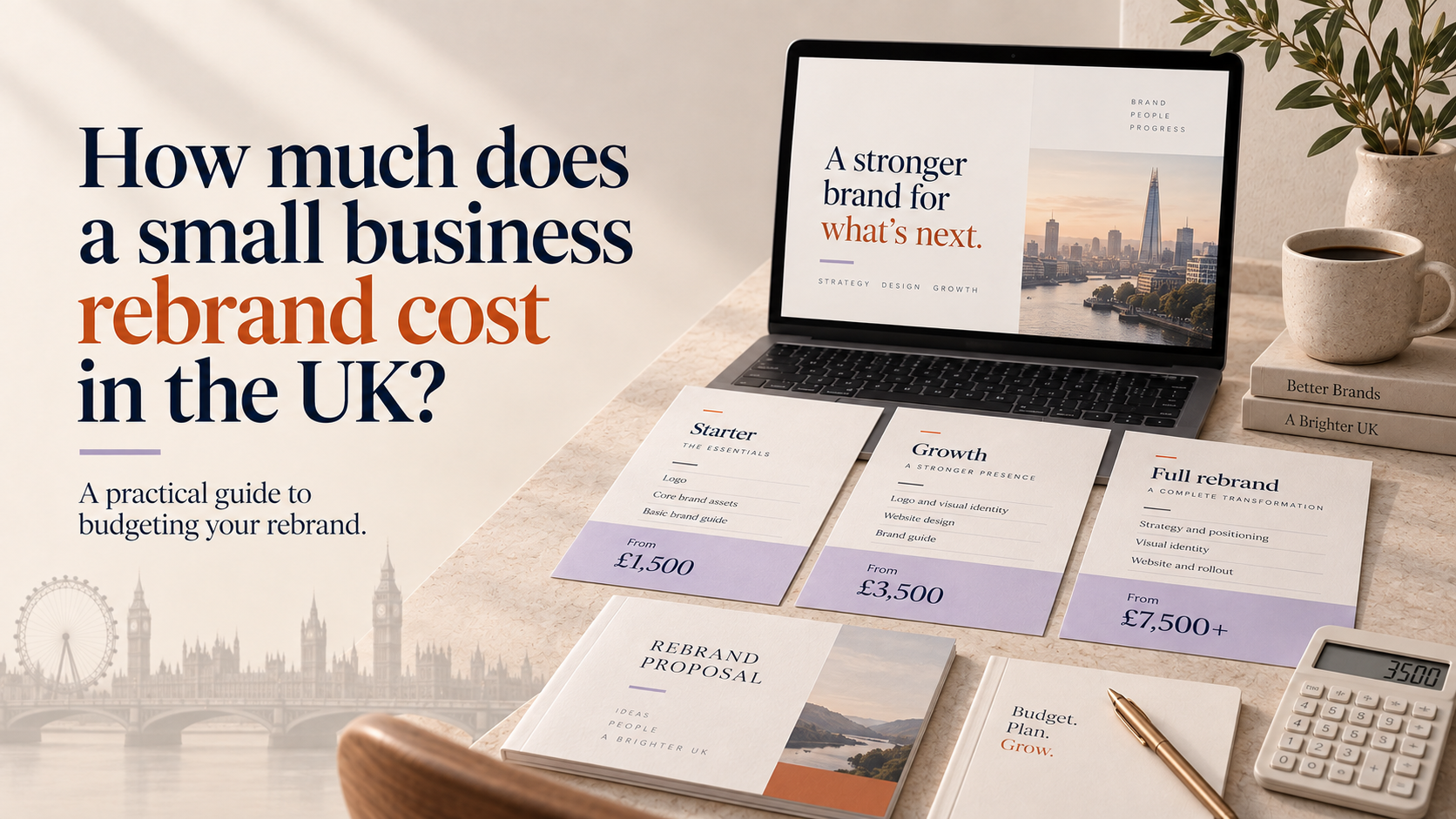
Budgeting depends on scope. Use the phased approach here: agree the phases you need, prepare a brief and request comparable quotes. Precise market ranges should be confirmed with suppliers or after reviewing current agency surveys.
What is the difference between a brand refresh and a full rebrand?
A refresh makes cosmetic updates while keeping strategy and core identity. A full rebrand revises strategy, positioning and produces a new identity and often requires wider rollouts including website rebuilds.
How long does a typical small business rebrand take?
Timelines vary by phase and scope. A limited refresh can be completed in a shorter timeframe, while a full rebrand with a website rebuild and rollout will take longer. Confirm timelines with suppliers as part of your brief.
Can I phase a rebrand to spread costs across several months?
Yes. Phasing reduces upfront cost and risk. Prioritise discovery and core identity first, then schedule digital rebuilds and production runs as subsequent phases.
Should I hire an agency or a freelancer for my rebrand?
Agencies offer end-to-end project management and multiple disciplines in-house; freelancers can be cost-effective for discrete tasks. Many small businesses combine agency strategy with freelance execution for flexibility and cost control.
Request a free consultation with Logo Metic to discuss your rebrand, share your brief and get a tailored quote. Email support@logometic.co.uk or call +44 7883 180004 to arrange a meeting and next steps.
Related reading: see our advice on how to rebrand a small business without confusing customers and further cost detail for logos at Professional logo design cost UK.