If you’re wondering about wordpress website cost uk small business, this guide explains what affects price, how to compare quotes and the practical steps to get an accurate, itemised proposal from an agency.
What determines the wordpress website cost uk small business: main factors
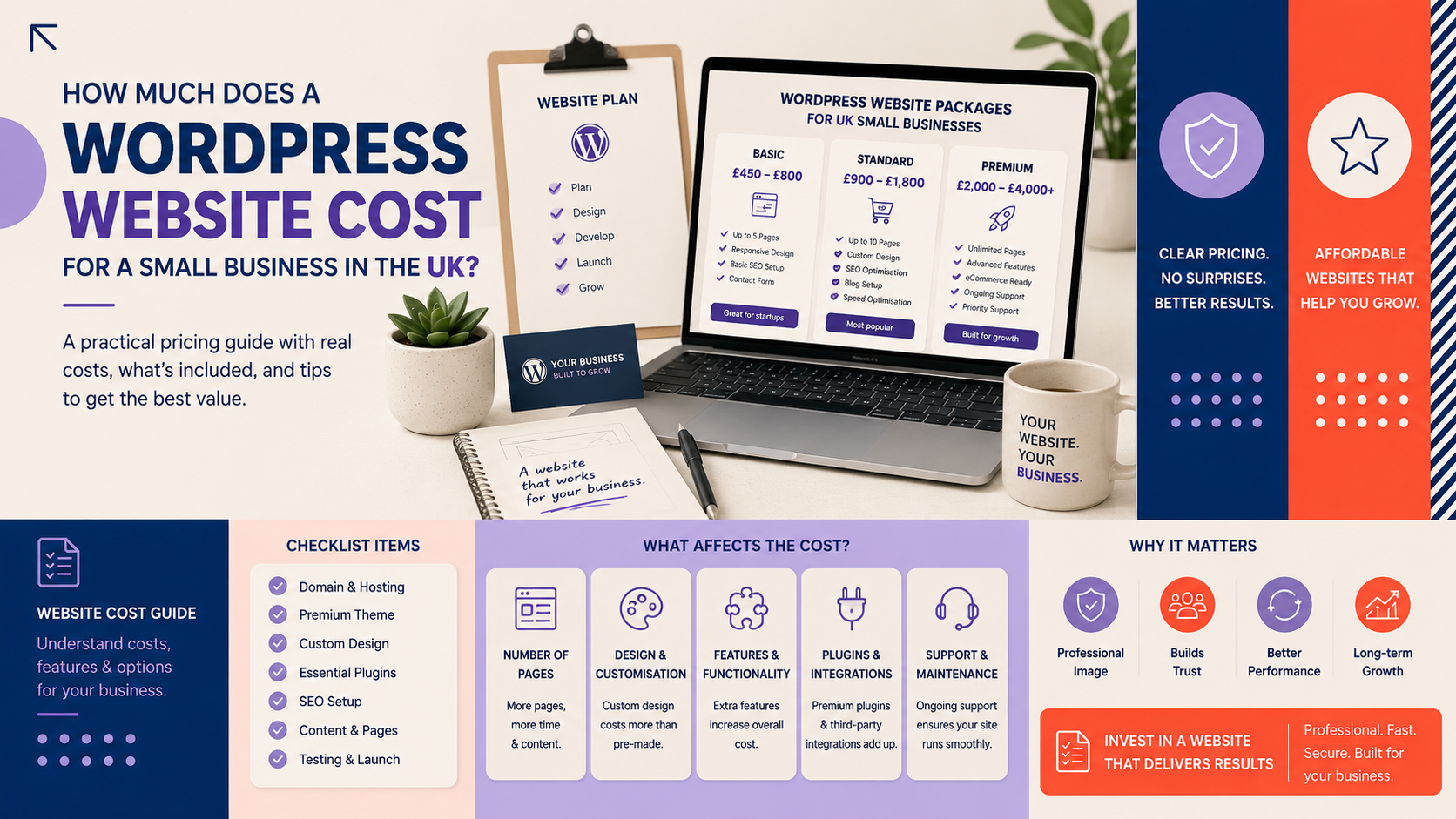
Costs vary because projects differ. Understanding the primary drivers helps you control budget and compare suppliers fairly. Below are the common cost areas to consider.
Design and branding complexity (templates vs custom design)
Design ranges from using an off-the-shelf theme to a fully bespoke visual system. Template-based sites are quicker and cheaper to build but require careful selection and customisation to avoid a generic look. A custom design gives a unique brand presence and better conversion-focused layouts, and may also require logo or brand work. If you need a tailored brand, consider a Custom logo design to align branding with your new site.
Number and type of pages and content requirements
More pages and specialised content (case studies, downloadable resources, long-form service pages) increase design and build time. Structured content such as staff profiles, team pages or locations often needs templates and additional CMS setup.
Functionality: brochure site, blog, booking, memberships, ecommerce
Functionality is one of the biggest cost drivers. A basic brochure site with contact forms is straightforward. Adding bookings, memberships, user accounts or multi-step forms increases complexity and testing time. Always map functionality to priority so you get the essentials first.
Ecommerce specifics: product counts, payment gateways, integrations
Online stores require product setup, payment gateways, tax and shipping configuration, and often integrations with stock systems or marketplaces. The number of products, product variants and bespoke checkout rules will add time. If you are considering alternatives to WordPress for selling, see our Shopify web design if you prefer a hosted ecommerce platform and weigh the trade-offs.
Technical setup: hosting, domain, SSL, email and security
Hosting quality affects performance and resilience. Agencies can recommend and set up hosting, or you can supply your own. Responsive design and performance optimisation for mobile users are essential—see our Responsive web design services for mobile-friendly sites and our deeper guide on why it matters for local businesses: responsive web design for small business matters: a guide for UK local businesses.
Third-party software: premium themes, page builders and plugin licences
Many projects use premium tools (page builders, SEO plugins, security or caching licences). These incur recurring licence fees. Decide early whether you want a builder-based approach or a lighter custom theme—both have pros and cons for cost and future flexibility.
Content creation and SEO (copywriting, images, structure)
Providing your own content reduces cost. Professional copywriting, image sourcing, or structured SEO-friendly content architecture add to the scope but improve long-term performance. Make clear which content you will supply and which items the agency must deliver.
Ongoing maintenance, updates and support
Maintenance is usually charged separately as a monthly retainer or ad-hoc hourly rate. Think beyond the build: security updates, backups, plugin renewals and technical support are recurring responsibilities and should be budgeted accordingly.
Common small business WordPress site scopes (examples, no prices)
Small brochure site for local trades or consultants: key features and tasks
- 5–8 pages: Home, About, Services, Contact, Testimonials, Gallery
- Mobile-friendly template customisation
- Contact form, basic SEO setup and Google Analytics
- Client provides logo, service copy and images (option for agency copy)
Service-led site for B2B firms: additional features to expect
B2B sites often need case studies, downloadable PDFs, CRM integration or gated content. These features require extra design for trust-building and lead capture. For sector-specific work, review our B2B web design expertise.
Ecommerce starter store: core requirements and extra work that increases complexity
A starter store will include product pages, payments, basic tax and shipping. Extra complexity comes from large product catalogues, subscriptions, multi-currency, or marketplaces. If you need specialist ecommerce work, see our e-commerce web design services.
Growing business site with integrations: CRM, booking engines, multi-channel selling
Integrations (CRM, EPOS, booking engines) increase planning, testing and maintenance. These projects require clear API access and agreement on data flows in the brief.
How to estimate your project budget (practical steps)
Map required functionality to priority
Create a three-column list: must-have, nice-to-have and future phase. That helps agencies propose a phased approach, keeping the initial build focused and affordable.
Use a features checklist to compare quotes
Prepare a checklist of features (pages, forms, integrations, SEO, ecommerce) and send the same list to multiple suppliers. This creates apples-to-apples comparisons.
Ask suppliers for itemised quotes and how to compare them
Request line-by-line costs for design, development, licences, hosting and content. Don’t accept a single lump-sum without details; itemisation reveals assumptions and optional extras.
Consider total cost of ownership (one-off vs recurring costs)
Factor in hosting, SSL, plugin licences, backups and maintenance when setting your budget. One-off build fees are only part of the ongoing cost.
Ways to reduce cost without harming value
- Phase the project so essential features launch first.
- Use a high-quality theme and limit heavy customisation.
- Provide content and product data yourself where possible.
What good quotes should include
Clear scope and deliverables
The proposal should spell out what will be delivered, including page templates, integrations and responsibilities for content.
Timelines and milestones
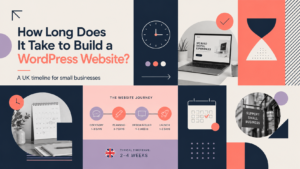
Agencies should list a realistic timeline with milestones and estimated delivery dates. For an idea of reasonable timelines, read How long does it take to build a WordPress website? A UK timeline.
Itemised costs (design, development, licences, hosting, content)
Itemisation lets you compare prices and spot hidden costs—hosting, SSL, premium plugins and image licences should be explicit.
Post-launch support and maintenance options
The quote should state what support is included after launch and offer upgrade or retainer options for ongoing maintenance.
Ownership, access and handover
Confirm who owns the site assets, where backups are stored and that you will receive WordPress admin access plus instructions for basic updates.
How to compare agencies and avoid common pitfalls
Portfolio and sector experience
Review recent examples in your sector and ask about measurable project goals. A relevant portfolio indicates practical experience with similar challenges.
Technical skills and platform approach (custom vs page builder)
Ask which theme or page builder they use and why. Builder-based projects can be faster; custom themes may be lighter and easier to maintain long-term.
For WordPress specialists and to request a consultation, consider contacting our WordPress web design services for small businesses.
Communication, project management and timelines
Good agencies provide a named project manager, regular updates and an agreed feedback process.
Support, warranties and ongoing relationship
Check what happens if something breaks after launch and whether emergency support is included or charged separately.
Red flags in quotes and contracts
- Vague scope or missing milestones.
- No clear ownership of assets or access rights.
- Unspecified recurring fees for critical items such as backups or security.
Budgeting checklist & sample brief to request quotes
Use this compact brief to send to agencies. It ensures you receive comparable proposals.
Project overview and objectives
Briefly state your business, purpose of the site and primary goals (lead generation, sales, bookings).
Required pages and functionality checklist
- List essential pages (Home, About, Services, Contact, Shop, Blog).
- List integrations (CRM, booking system, payment gateway).
- State any accessibility or compliance needs.
Content and assets you will provide
Specify which items you will supply (logo, copy, images) and which you need the agency to create.
Preferred deadlines and launch window
Give a target launch date and any immovable milestones.
Questions to ask suppliers (items to request in the quote)
- Detailed scope and itemised costs.
- Sample project plan and milestones.
- Examples of similar projects and client references.
For a ready-to-use checklist you can download and adapt, see our WordPress website design checklist for UK small businesses.
Next steps: getting an accurate quote
How to prepare for a discovery call
Prepare your objectives, budget range, content availability and examples of sites you like. This helps an agency give realistic advice.
What documentation to email before the meeting
Send your brief, brand assets, current site access (if applicable) and any product lists. Clear information speeds up quoting.
Requesting an itemised proposal and timeframe
Ask for a written, itemised proposal with milestones and clear acceptance criteria so you can compare suppliers and schedule the work.
Using the proposal to decide and plan phases
Use the proposal to decide whether to proceed in a single phase or launch a Minimum Viable Site and schedule enhancements later.
Frequently asked questions
Will I need to pay ongoing fees after my WordPress site launches?
Yes. Expect recurring costs such as hosting, domain renewal, SSL, plugin licences and optional maintenance or support retainer. Ask suppliers for an annual or monthly estimate.
Should my small business use a page builder or a custom WordPress theme?
Page builders speed development and allow non-technical editing, but can add weight and long-term maintenance. Custom themes are leaner and can be easier to update if coded well. Choose based on required flexibility and who will manage content.
What questions should I ask agencies when requesting a quote?
Ask for an itemised scope, timeline, examples of similar work, post-launch support options and who will own the site assets and accounts.
How long does it usually take to build a WordPress website for a small business?
Timelines vary with complexity. A simple brochure site can take a few weeks; larger or integrated projects take longer. For typical UK timelines and stages, see our article How long does it take to build a WordPress website? A UK timeline.
Can I reduce cost by supplying my own content and images?
Yes. Providing polished copy and images reduces agency time on content creation. Clear, well-structured content speeds the build and lowers cost.
Request a free consultation with Logo Metic to get a tailored, itemised quote for your WordPress website. Email support@logometic.co.uk or visit our WordPress web design services for small businesses to book a consultation and discuss your project.